How to improve trust in the age of analytics and AI
Fine-tuning efforts to improve data stewardship helps protect the person, the meaning and the decision behind every dataset.
As healthcare data grows in volume and connectivity, stewardship becomes one of the most important responsibilities in modern healthcare.
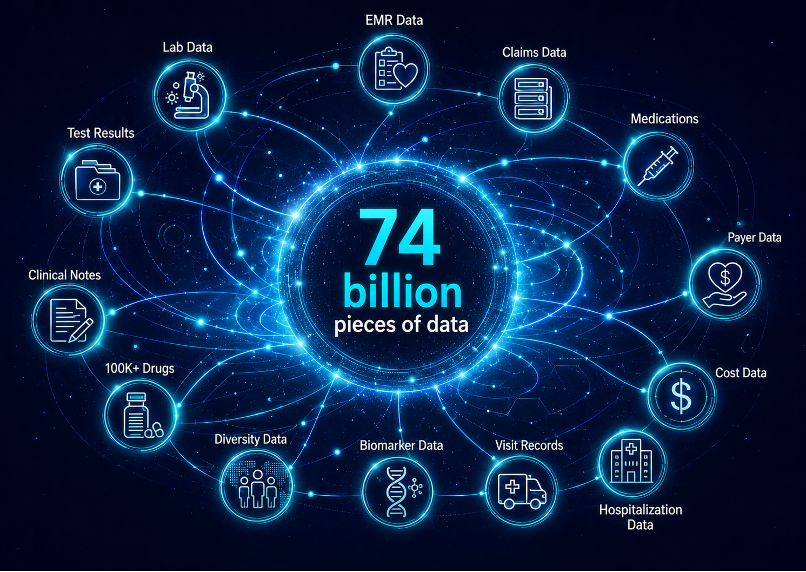
The visual in this series shows data domains arranged around common linking keys and information flows. It reminds us that healthcare data is not static. It moves across teams, systems, vendors, reports, analytics platforms, quality programs, compliance processes and, increasingly, artificial intelligence tools. Each movement creates opportunity, but each movement also creates responsibility.
Data stewardship is often misunderstood as a back-office function. In reality, it is a trust function. It determines whether healthcare organizations can use data in ways that are accurate, secure, explainable and aligned with patient and member benefit. Stewardship is not only about protecting data from misuse; it is also about protecting data from misinterpretation.
Stewardship responsibilities
A practical way to think about stewardship is through three responsibilities – protect the person, protect the meaning, and protect the decision.
Protecting the person includes privacy, security, consent awareness, minimum necessary use, access controls, encryption, monitoring and respect for the sensitivity of health information. The HIPAA Privacy Rule permits certain uses and disclosures of protected health information for treatment, payment and healthcare operations, with limits and protections. The HIPAA Security Rule requires appropriate administrative, physical and technical safeguards for electronic protected health information. These requirements are essential, but they should be viewed as a floor for trust, not the ceiling.
Protecting the meaning of data requires a different but equally important discipline. A dataset may be secure, but it still may be misleading. A dashboard may be visually impressive and still be based on incomplete data. A predictive score may be statistically strong and still fail if the source data does not represent the population being served. Meaning depends on provenance, definitions, lineage, timeliness, completeness and context. Stewardship seeks to answer these questions: Where did the data come from? What was its original purpose? How was it transformed? What assumptions were applied? What limitations should users understand before making decisions?
Protecting the decision is where stewardship becomes operational. Healthcare data is often used to prioritize outreach, measure performance, assess risk, identify care gaps, support utilization management, evaluate cost trends or guide quality improvement. If the underlying data is wrong or incomplete, the decision may be wrong or incomplete. A stewardship culture therefore requires validation before use, monitoring after use and accountability when data products influence care, payment, access or quality outcomes.
Increasing urgency
This responsibility is becoming more urgent in the age of analytics and AI.
Predictive analytics, machine learning, automation, generative AI and retrieval-augmented tools can help summarize information, detect anomalies, surface risks and support faster decision-making. However, these tools do not remove the need for governance. Rather, they make governance more visible. AI can accelerate insight, but it can also accelerate bias, data-quality issues, outdated logic and misunderstood correlations. Responsible AI begins with responsible data stewardship.
Equity adds another important dimension. Diversity data, social risk data, language, location, disability and other population indicators can help organizations understand disparities and design better interventions. At the same time, sensitive data can be misused if purpose, governance and safeguards are weak. Stewardship requires clarity about why data is collected, how it will be used, who benefits, how access is controlled and how unintended consequences will be monitored.
Before using healthcare data for reporting, analytics, automation or AI, teams should pause and ask a few practical questions.
What decision will this data support?
Who may be affected by that decision?
Is the data complete enough for this purpose?
Are the linking keys reliable?
Has the data been validated against source systems or known controls?
Are access permissions appropriate?
Are limitations documented?
Is there a mechanism to challenge or correct the output if it appears wrong?
These questions may seem simple, but they are the habits that build trustworthy data use.
Wide-ranging responsibility
Stewardship cannot sit with one department alone. It requires partnership among data management, clinical operations, quality, compliance, privacy, security, analytics, technology, finance and business teams. Every person who defines, extracts, maps, tests, approves, reports or acts on healthcare data plays a role. In this sense, data quality is part of patient safety, operational integrity and organizational credibility.
The future of health data management will require more than technical expertise. It will require judgment, humility, governance and a clear commitment to human impact.
Healthcare data may be stored in tables, files, dashboards and models, but its purpose is not abstract. Its purpose is to support better care, better decisions, better equity and better trust. That is the responsibility of stewardship in the age of analytics and AI.
Sravan Kumar Nidiganti, MBA, LSSGB, MACHE, FACHDM is the leader of enterprise quality management, benefits and clinical operations for CVS Health.