Linking healthcare data: From fragmented signals to meaningful insight
Healthcare executives need a better appreciation for why common keys, context and governance matter in health data management.
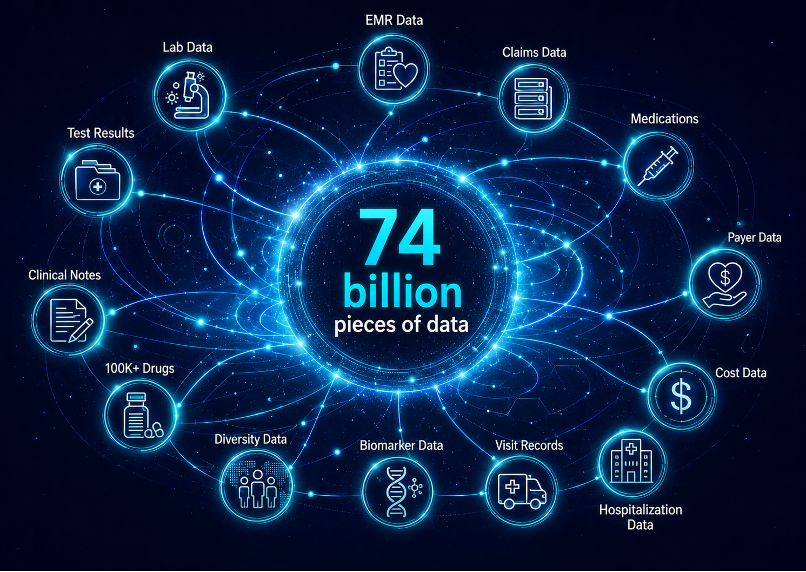
Healthcare organizations rarely suffer from a lack of data. They struggle with disconnected data.
For providers, lab results may live in one system, clinical notes in another, claims in another, pharmacy records in another and cost or payer information in yet another. Each system may be accurate for its own operational purpose, but the patient journey is not contained in one system – it is distributed across many systems, workflows, vendors and time periods.
The graphic associated with this article series highlights a critical concept in health data management – common linking keys. Patient or member ID, encounter or visit ID, claim ID, provider ID, drug or National Drug Code, and date and time act as bridges across the ecosystem. These keys help convert disconnected data points into a more complete picture. Without them, healthcare data remains fragmented. With them, organizations can begin to see patterns across diagnosis, treatment, utilization, pharmacy, cost, quality and outcomes.
Linkage is powerful because healthcare decisions depend on context. A lab result may become more meaningful when connected to diagnosis, medication history and recent visits. A medication claim may become more meaningful when connected to formulary rules, adherence patterns, safety alerts and hospitalization data. A cost trend may become more meaningful when linked to utilization, care setting, population needs and benefit design.
Linking data helps transform the question from “What happened?” to “What may be driving this, and where can we intervene?”
The challenges of linkages
However, linking healthcare data is not a simple technical exercise. It requires domain understanding.
A member ID may change because of eligibility transitions, product changes or payer migrations. An encounter ID may not perfectly align with a claim line. A provider ID may represent a billing provider, rendering provider, facility, group or prescriber, depending on the source. A drug code may identify package, strength, dosage form or dispensing detail, but it may not fully explain therapeutic intent. A date field may represent service date, fill date, admission date, discharge date, received date, paid date or update date. These distinctions matter.
This is why data dictionaries, metadata, lineage and business definitions are not administrative extras – they are the infrastructure of trust. When teams use the same field name with different meanings, reports may appear aligned while decisions quietly diverge.
When lineage is unclear, leaders may not know whether a number came from a source system, a transformed table, a manual adjustment or an automated rule. When date logic is not documented, trend analysis can become misleading. Strong data management makes assumptions visible before they become operational risk.
The visual also distinguishes different types of linkage – shared identifiers, clinical correlations and administrative or financial relationships. Each type of linkage serves a different purpose. Shared identifiers help connect records reliably. Clinical correlations help connect symptoms, tests, diagnoses, medications and outcomes. Administrative and financial links help connect coverage, claims, payment, cost and utilization. A mature data ecosystem understands all three and avoids treating every connection as equal.
A scenario as an example
Consider a common quality improvement scenario in which an organization seeks to identify members with diabetes who may need followup.
A complete analysis may require diagnosis codes, lab values, medication fills, eligibility data, provider relationships, encounter history, care gaps and outreach status. If pharmacy data is missing, adherence insights may be incomplete.
If lab data is delayed, clinical status may be outdated. If eligibility logic is wrong, the denominator may be inaccurate. If provider attribution is unclear, outreach may go to the wrong care team. In each case, the issue is not only data availability; it is linkage quality.
There is also a privacy dimension. The more datasets are linked, the more useful they become, but also the more sensitive they become. Data that appears limited in one context may become identifiable or revealing when combined with other data. Responsible linkage therefore requires governance, role-based access, minimum necessary use, auditability and clear purpose.
The goal is not to prevent appropriate data use. The goal is to enable meaningful use while protecting people and maintaining trust.
For health data management professionals, the responsibility is to build bridges that are accurate, explainable and ethical. We must ask whether identifiers are stable, whether source-system changes have been assessed, whether transformations are documented, whether clinical meaning is preserved and whether users understand the limitations of the linked dataset. Good linkage should make healthcare clearer, not create false confidence.
The future of healthcare will not belong only to organizations with the most data. It will belong to organizations that can connect data responsibly, explain it clearly and use it to improve care.
When linking keys are managed well, healthcare data becomes more than a collection of files. It becomes a connected story that can support better decisions, stronger quality, improved access and more trustworthy innovation.
Sravan Kumar Nidiganti, MBA, LSSGB, MACHE, FACHDM is the leader of enterprise quality management, benefits and clinical operations for CVS Health.